GRP-NDFP talks on social and economic reforms face delay due to differences on outline

PRESS RELEASE

Discussions on social and economic reforms (SER) during the peace talks between the National Democratic Front of the Philippines (NDFP) and the Government of the Republic of the Philippines (GRP) today has been delayed after both reciprocal working committees (RWC) differed on the outline of the agreement.

For the NDFP, the outline “should be based on addressing the roots of the armed conflict while the GRP wants an outcomes-based outline.”

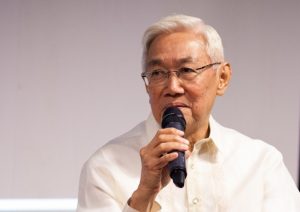
GRP-NDF talks round 2 | Photo: DavaoToday.com

GRP-NDF talks round 2 | Photo: DavaoToday.com

“We have exchanged with the GRP an outline of a comprehensive draft on social and economic reforms that includes agrarian reform, national industrialization, environmental protection, environmental protection, rights of the working people, foreign economic and trade relations, and, monetary and fiscal policies,” says Julie De Lima, chairperson of the NDFP-RWC-SER.

“We also welcome the GRP’s acceptance of the NDFP draft as the working draft of the discussions on social and economic reforms,” De Lima said.

De Lima said that while both parties agreed to adopt the “preamble and declaration of principles” of the NDFP draft, the GRP wants the ‘bases, scope and applicability’ to be deferred” until they have exchanged a more detailed outline of the nine-point outcome.

“It was the GRP who requested the postponement of discussions on the CASER for them to elaborate on their nine-point outcomes-based proposal,” says De Lima.

“The main purpose of the peace negotiations is to address the roots of the armed conflict which, among others, includes poverty, landlessness, joblessness, hunger, and inequality,” De Lima said adding: “placing the outcome ahead in an outline of an agreement on social and economic reforms is like putting the cart before the horse.”

The GRP vowed to elaborate on their proposed outcome and present it tomorrow morning since it contains, according to the NDFP are “mere generalizations” and fails to include details on how to achieve the outcomes.

The GRP’s nine-point outcome includes poverty eradication, environment and climate justice, globally competitive economy, adequate and quality social services, reduced inequalities, peaceful rural communities, food security, living incomes, and gender equality and representation. “These issues are all addressed in more detail in the NDFP draft outline,” De Lima said. #

Second round opens on an optimistic note but a thorny issue persists

Press Release | 6 October 2016

The second round of the GRP-NDFP peace negotiations started with the two panels expressing optimism on the success of the talks. Both panels are acutely aware of the high expectations among our people especially since the next item in the substantive agenda, social and economic reforms, has been variously described as the “meat of the peace negotiations” and the “heart and soul of the peace negotiations”.  This is because it would involve addressing one of the principal causes of the ongoing armed conflict: widespread poverty along with issues of unemployment, underdevelopment, social injustice and so on.

But one thorny issue has persisted that is testing the patience of the NDFP negotiating panel and threatening to spoil the initial optimism that has arisen under the new administration of GRP President Rodrigo Duterte.

The new NDFP panel Chair Fidel Agcaoili, pointed to this issue in his opening speech when he highlighted the long-standing concern of the NDFP regarding the release of more than 400 political prisoners accumulated during previous GRP administrations in violation of CARHRIHL and the Hernandez political offense doctrine by piling up charges of common crimes on suspected NDFP personnel.  The release of the current political prisoners is therefore a matter of justice.

According to NDFP Chief Political Consultant Jose Maria Sison, the NDFP was greatly encouraged when Pres. Duterte promised to proclaim a general amnesty as the most effective way of redressing this injustice.  Because of this, the NDFP responded positively to the long-standing demand of the GRP for a ceasefire.  In the past the NDFP was cool to the idea of a ceasefire because GRP forces had the habit of violating their own ceasefire anyway by continuing to conduct military operations in the field.

The NDFP has kept to its obligation on its unilateral ceasefire declaration.  The current ceasefire has been holding and so far no fighting has been reported between the AFP and the NPA. However, the promise to release the political prisoners seems to be suffering from delay after delay after delay.

The NDFP panel chair served notice to the GRP side that if this anomalous situation continues, it can serve as a disincentive to the NDFP in further pursuing the discussions on prolonging the ceasefire and arriving at a bilateral agreement on a more stable ceasefire.  It can also hinder progress in working out agreements on social and economic reforms (SER), political and constitutional reforms (PCR) and end of hostilities and disposition of forces (EHDF).

On the other hand, a prompt resolution of this issue will go a long way in creating a favorable atmosphere for prolonging the ceasefire and advancing the negotiations on SER, PCR and EHDF.

Agcaoili recalled that it was Pres. Duterte himself who offered to declare amnesty as the most expeditious way of effecting the release the more than 400 political prisoners to redress the injustice. Pres. Duterte made the promise during their first meeting on May 16 in connection with the resumption of the peace negotiations.

He said that Duterte was of the opinion that amnesty would be the best mode of release among the various methods that Agcaoili had recommended, such as archiving, bail, recognizance in effecting the release of all the political prisoners, including JASIG-protected persons, the sick, elderly, women and long-term detainees for humanitarian reasons.

Agcaoili clarified that the proffered amnesty proclamation pertains to the currently detained political prisoners and not to a general amnesty that is mutually extended to the forces of both parties in the final settlement of an armed conflict.  He made the clarification in view of recent statements from GRP panel chief Silvestre Bello III that an amnesty proclamation would be issued by Duterte only upon the successful conclusion of the peace negotiations.

He stressed that these two amnesty concepts should not be muddled, “lest we be accused of using the political prisoners as leverage to secure advantage across the negotiating table or to demand capitulation of one side by another.”

“The continuing detention of the more than 400 political prisoners is manifestly a grave injustice,” said Agcaoili.  “It does not befit a regime that wants to bring about change by engaging in peace negotiations with the revolutionary movement and the Moro people.”  #

Reference:
NDFP Media Group
Dan Borjal
email: [email protected]
twitter: https://twitter.com/dfborjal
facebook: https://www.facebook.com/dborjal
viber: +31 643108419
whatsapp: Dan Borjal

Fidel V. Agcaoili NDFP Peace Panel Chairperson Opening Statement

Opening Statement | 6 October 2016
Fidel V. Agcaoili
NDFP Peace Panel Chairperson
Oslo, Norway

Magandang hapon sa ating lahat!

This opening statement will be brief.
As the newly-appointed Chairperson of the NDFP Negotiating Panel, I intend to pursue the policies of the revolutionary movement on the peace negotiations as ably carried out by my predecessor and now Senior Adviser, Chairperson Luis Jalandoni.
Let me tell you frankly that I do not relish this new role. I was content to be an ordinary member of the Panel and, sometimes, be appointed as emissary to the GRP, to then Presidents Cory Aquino and Fidel Ramos and now to President Rodrigo Duterte. But rest assured that I will do my best to accomplish the task that has fallen on my shoulders.

My opening statement focuses on the issue of the release of all political prisoners as a matter of justice and in compliance with the Joint Agreement on Safety and Immunity Guarantees (JASIG) and the Comprehensive Agreement on Respect for Human Rights and International Humanitarian Law (CARHRIHL). The most effective method of release is through an amnesty proclamation as offered by President Rodrigo Duterte himself.

The release of all political prisoners through amnesty was offered by President Duterte during my first meeting with him on 16 May 2016 in connection with the resumption of the peace negotiations. Compared to the various methods that I had recommended, such as archiving, bail, release on recognizance, etc., he stated that granting amnesty would be the most effective mode in releasing the JASIG-protected persons, the sick, elderly, women and long-term detainees for humanitarian reasons, and all the political prisoners.

His offer was made in the presence of a current member of the GRP Panel, a Congressman who is now in our midst in this current round of talks as a member of the delegation from the House of Representatives, and several other persons.

Now, I am mentioning this in order to clarify that the proffered amnesty proclamation pertains to the political prisoners and not to a general amnesty that is mutually extended to the forces of both Parties in the final settlement of an armed conflict.
We should not muddle these two amnesty concepts, lest we be accused of intending to make use of the political prisoners as a leverage or hostage to secure advantage across the negotiating table or to demand capitulation of one side by another.

The continuing detention of the more than 400 political prisoners is manifestly a grave injustice. It does not befit a regime that wants to bring about change by engaging in peace negotiations with the revolutionary movement and the Moro people.
We should bear in mind that their continuing detention is a blatant violation of the CARHRIHL. They are unjustly detained on trumped-up charges of common crimes in violation of the Hernandez political offense doctrine that has been enshrined in the CARHRIHL.

President Duterte himself in his conversation with NDFP lawyers and GRP Panelists on 15 August 2016 in Malacanang Palace, reaffirmed his belief in the correctness and justness of the 1956 Philippine Supreme Court decision on the case against Amado V. Hernandez on rebellion complex with common crimes.

The NDFP stands firm in calling for the release through amnesty of the 432 political prisoners not only as a matter of justice but also in basic compliance of the CARHRIHL.

Their release will undoubtedly serve as an incentive in accelerating the peace negotiations and in forging a more stable ceasefire agreement.

I hope we can resolve these crucial issues so that we can move forward.
Maraming salamat po!

Reference:
NDFP Media Group
Dan Borjal
email: [email protected]
twitter: https://twitter.com/dfborjal
facebook: https://www.facebook.com/dborjal
viber: Dan Borjal
whatsapp: Dan Borjal

Announcement on the new composition of the NDFP Negotiating Panel

The national leadership of the National Democratic Front of the Philippines (NDFP) has granted the long-standing request of Comrade Luis G. Jalandoni to resign as the Chairperson of the NDFP Negotiating Panel.

The national leadership of the NDFP is grateful for the valuable service that Comrade Jalandoni has given to the peace negotiations. He continues to be involved in the GRP-NDFP peace negotiations as a Senior Adviser.

In his place, the national leadership of the NDFP has appointed Fidel V. Agcaoili as the new Chairperson of the NDFP Negotiating Panel. Comrade Agcaoili has been serving as the Vice-Chairperson of the NDFP Negotiating Panel in the past years.

In order to further strengthen the NDFP Negotiating Panel, NDFP Peace Consultant, Benito Tiamzon is named by the NDFP national leadership as Member of the NDFP Negotiating Panel.#

Reference:
NDFP Media Group
Dan Borjal
email: [email protected]
twitter: https://twitter.com/dfborjal
facebook: https://www.facebook.com/dborjal
viber: Dan Borjal
whatsapp: Dan Borjal

Announcement on the new composition of the NDFP Negotiating Panel

The national leadership of the National Democratic Front of the Philippines (NDFP) has granted the long-standing request of Comrade Luis G. Jalandoni to resign as the Chairperson of the NDFP Negotiating Panel.

The national leadership of the NDFP is grateful for the valuable service that Comrade Jalandoni has given to the peace negotiations. He continues to be involved in the GRP-NDFP peace negotiations as a Senior Adviser.

In his place, the national leadership of the NDFP has appointed Fidel V. Agcaoili as the new Chairperson of the NDFP Negotiating Panel. Comrade Agcaoili has been serving as the Vice-Chairperson of the NDFP Negotiating Panel in the past years.

In order to further strengthen the NDFP Negotiating Panel, NDFP Peace Consultant, Benito Tiamzon is named by the NDFP national leadership as Member of the NDFP Negotiating Panel.#

Reference:
NDFP Media Group
Dan Borjal
email: [email protected]
twitter: https://twitter.com/dfborjal
facebook: https://www.facebook.com/dborjal
viber: Dan Borjal
whatsapp: Dan Borjal

Social-economic accord to lay down sovereign economy: Peace pact to serve as “bridge” for Duterte in crossing the Rubicon with US, says NDF

Utrecht – The Government of the Republic of the Philippines (GRP) should strike a peace deal on social and economic reforms (SER) with the National Democratic Front of the Philippines (NDFP) that would serve as a “bridge” for President Rodrigo Duterte in crossing the Rubicon with the United States.

The statement was issued by the NDFP Reciprocal Working Committee on Social and Economic Reforms (RWC-SER) after reports quoted Duterte in saying that the Philippines may need Russia’s help if the country distances itself from the United States.

“I’ve been talking with Prime Minister Medvedev. One-on-one kami. Walang nakalaam noon. I said, ‘I think I am about to cross the Rubicon between me and the US, at least for the 6 years. I would need your help and everything – trade, commerce. I will open up,’” he said.

“Aside from laying down the foundation for a just and lasting peace, crafting an agreement on social and economic reforms would serve as a bridge for President Duterte in crossing the Rubicon with the United States while establishing equal foreign relations with China and Russia,” says Julie de Lima, chairperson of the NDFP RWC-SER.

“Crossing the Rubicon cannot be simply done through burning bridges from one monopoly capitalist to another,” de Lima said adding, “it requires a combination of strong assertion of political and economic sovereignty coupled with people’s participation.”

“A democratic and sovereign Philippine economy that benefits the majority of Filipinos will end the country’s exploitation by ravenous foreign monopoly capitalists like the US,” she said.

The NDFP describes the second substantive agenda on social and economic reforms as the “meat” of the peace negotiations with genuine agrarian reform and national industrialization as the “key factors” in addressing the roots of the armed conflict.

“An economy founded on genuine agrarian reform and national industrialization will lead the country away from the weak speculative and portfolio investment-based economy prone to political blackmail,” de Lima said referring to reports blaming Duterte for the seven-year low of the plunging of the peso and for alienating the Philippines’ trading partners like the US and European Union.

Last week, the NDFP exchanged with the GRP a proposed “framework and outline” for the Comprehensive Agreement on Social and Economic Reforms, the second substantive agenda to be tackled in the next round of peace negotiations in Oslo, Norway on October 6-10.

The exchange of “framework and outline” was agreed upon during the meeting of the Reciprocal Working Committees on Social and Economic Reforms (RWC-SER) of both Parties last August 24. The substantive agenda on social and economic reforms is next to be negotiated by the two parties according to the framework agreement set by The Hague Joint Declaration of 1992.

Disarm and disband the paramilitaries!

The Regional Operations Command of the New People’s Army in Southern Mindanao asserts that all paramilitaries must immediately be disarmed and disbanded. Their very presence and continued operations only sow terror and disunity and aggravate the dire situation of Lumads and peasants in the countryside, especially in Mindanao.

The NPA likewise takes stock of GPH Pres. Rodrigo Duterte’s order for the Armed Forces of the Philippines to “take full control of the paramilitaries” they recruit and arm with weapons “issued by the government” as it effectively unmasks the AFP’s direct command over these armed groups. It is also a recognition of the countless crimes and injustices that paramilitaries have committed and continue to commit even with the declaration of the GPH unilateral ceasefire.

Last September 13, the paramilitary Blackfighter of the 39IB-AFP killed and looted peasant couple Norberto and Rita Gascon in Brgy Lanao Kuran, Arakan, North Cotabato. On July 30, the paramilitary New Indigenous Peoples’ Army Reform (NIPAR) headed by notorious killer Alde “Butchoy” Salusad strafed a Lumad wedding, killing Makinit Gayuran, a pregnant woman, in San Fernando, Bukidnon. On July 1, the paramilitary Bagani Mansandong, also of the 39IB, mutilated before summarily killing Noel “Ka Jepoi” Gulmatico, a Red fighter, in Magpet, North Cotabato.

The crimes of paramilitaries have become increasingly frequent and vile, especially under the IP-centric Oplan Bayanihan tailored from the US Counterinsurgency Guide. The AFP tried in vain to wash their hands clean of the bloody murders of ALCADEV Administrator Emerito Samarca and mass leaders Dionel Campos and Bello Sinzo and many other innocent civilians and non-combatants, including the Italian missionary Fr. Fausto “Pops” Tentorio. The AFP is responsible for the heinous crimes committed by paramilitaries such as the Alamara in Davao del Norte and Agusan del Sur, the Bagani in North Cotabato, the Magahat in Surigao del Sur and the Mandaya Ancestral Defense Unit (Manadu) in Davao Oriental, among others. Worse, these groups have become more abusive and enjoy impunity as they are being coddled by fascist bureaucrats like Davao Oriental Congresswoman Corazon Malanyaon and North Cotabato Congresswoman Nancy Catamco.

At the same time, the AFP, when it suits its purpose, use these paramilitaries as convenient excuse for their own violations. On July 27, during the GPH unilateral ceasefire, the 72IB-AFP mobilized the Alamara in an offensive operation in the hinterlands of Kapalong, Davao del Norte which resulted in a counter-offensive action by the NPA. The AFP later cried foul over the incident claiming that the Alamara were members of the CAFGU who were returning home from their combat operation.

Presently, NPA units around the region have reported continued troop movements by the AFP and their paramilitaries in direct violation of the GPH unilateral ceasefire. Aside from combat operations against the Red army, they carry on with their psywar and counter-revolutionary activities against civilians in the guise of Peace and Development Outreach Program under Oplan Bayanihan. They camp in barangay halls and schools, harass community educators and students, routinely conduct patrols that terrorize communities and subvert civilian authority. These combat operations and so-called civic-military operations, more than being mere defiance of the direct orders of the AFP’s commander-in-chief, are tantamount to derailing the peace process that aims to seriously address the roots of the armed conflict.

Under US-directed counterinsurgency campaigns, the AFP has actively recruited, armed and deployed paramilitaries to commit the most atrocious war crimes that violate People’s Rights, the International Humanitarian Law and CARHRIHL. Disarming and disbanding paramilitaries necessarily comply with the GPH unilateral ceasefire declaration to forward the peace negotiations.

(Sgd) RIGOBERTO F. SANCHEZ
Spokesperson
NPA-SMR

Socio-economic pact frameworks: GRP Constitution, NDF Program

NDF expect “spirited and interesting” discussion on frameworks
[Press release] The Communist Party of the Philippines’ (CPP) Guide for Establishing the People’s Democratic Government and the Program for a People´s Democratic Government of the National Democratic Front of the Philippines (NDFP) and the 1987 Constitution of the Republic of the Philippines (GRP) will serve as “guiding frameworks” in crafting an agreement on social and economic reforms under the proposed framework and outline exchanged by the NDFP.

Earlier this week, the NDFP exchanged with the GRP a proposed “framework and outline” for the Comprehensive Agreement on Social and Economic Reforms, the second substantive agenda to be tackled in the next round of peace negotiations in Oslo, Norway on October 6-10.

The exchange of “framework and outline” was agreed upon during the meeting of the Reciprocal Working Committees on Social and Economic Reforms (RWC-SER) of both Parties last August 24. The substantive agenda on social and economic reforms is next to be negotiated by the two parties according to the framework agreement set by The Hague Joint Declaration of 1992.

“The interests, rights and welfare of the people, and addressing the roots of the armed conflict should be of utmost importance,” says NDFP consultant and RWC-SER member Randall Echanis.

However, Echanis said, “We anticipate a spirited and interesting discussion on the frameworks, and at the same time expect it to be a bit contentious.”

Echanis added that “under the NDFP proposal the responsibility for implementation of the agreement shall be joint and separate.”

The Guide for Establishing the People’s Democratic Government is a 1972 document of the CPP that is being used by the NDFP as basic law in setting up the organs of people’s political power in guerrilla bases and revolutionary territories.

According to the NDFP proposal, the main CASER objectives are: a) carry out agrarian reform and national industrialization; b) advance the rights of exploited, oppressed, discriminated and disadvantaged sectors of society; c) uphold, protect, defend and promote economic sovereignty; and d) conserve the national patrimony and protect the environment.

In addition to the GRP’s 1987 Constitution and the CPP’s Guide for Establishing the People’s Democratic Government, the NDFP also proposed that the CASER refer to “universally accepted principles and instruments of international law, such as the International Covenant on Economic, Social and Cultural Rights of 1966, the International Labor Convention of 1948 on Freedom of Association and Protection of the Right to Organize and other similar or relevant international covenants.” #

Reference:
Randall Echanis
Member, NDFP-RWC-SER
Tel. No. 02-725-1457

Police arrest NPA in Mindoro, Revolutionaries condemn ceasefire violation

Revolutionary forces in Mindoro condemn the arrest of a Red fighter by PNP-Mimaropa amid the ongoing peace talks between the Government of the Republic of the Philippines (GRP) and the National Democratic Front of the Philippines (NDFP).

Ka Ma. Patricia Andal, NDF-Mindoro spokesperson, called the police as “traitor” and “insincere towards the peace talks” for arresting NPA member Jeffrey Delos Reyes while fulfilling his tasks for the said talks.

“The arrest of Delos Reyes by the police is an incontrovertible truth that eversince the police is insincere towards the ongoing peace talks,” Ka Patricia said. “We know for a fact that they can detest the revolutionaries because that is what they do. They are that boorish for disprespecting the ceasfire directive of their commander in chief Rodrigo Duterte.”

Ka Higom Maragang, spokesperson of the Lucio De Guzman Command (LDGC)/NPA-Mindoro, asserted that the cases filed against Delos Reyes are trump-up charges. He explained that those who uphold legitimate armed struggle should not be treated as criminals.

“This battle against the reactionary governmetn is legitimate because we fight for a genuine social change against the exploitation and oppression of the people by the ruling class. If this is not legitimate, the GRP should have not faced us in the peace negotiations,” Ka Higom said.

“Casualties among combantants in times of war are not crimes, and if that is, should not be charged as criminal cases against those in war. Unless they are violating the rules and international humanitarian laws of war, which are almost always violated by the mercenary armed forces of the GRP,” he explained.
Delos Reyes was arrested by the elements of the PNP-Mimaropa in Victoria, Oriental Mindoro while fulfilling his task for the peace talks. He is currently detained at the Oriental Mindoro Porivncial Jail in Calapan City and charged of murder and frustrated murder.

“the police is sabotaging the peace talks,” Delos Reyes said. “We call on those with us in our quest for lasting peace, let us intensify our support to the GRP-NDFP peace talks, call for the dismissal of all trump-up criminal charges against Red fighters, free all politica detainees, and fight for genuine change for the people,”
he ended.

Para sa mga katanungan, makipag-ugnayan kay Rowan sa +639477750427 / [email protected]


NPA, dinakip ng mga pulis sa Mindoro
Paglabag sa ceasefire, kinundena ng mga rebolusyonaryo

Mariing kinundena ng mga pwersang rebolusyonaryo sa Mindoro ang pagdakip ng PNP-Mimaropa sa isang Pulang mandirigma sa kabila ng umuusad na usapang pangkapayapaan sa pagitan ng Gubyerno ng Republika ng Pilipinas (GRP) at National Democratic Front of the Philippines (NDFP).

Tinawag ni Ka Ma. Patricia Andal, tagapagsalita ng NDF-Mindoro, ang mga pulis na “traydor at insinsero” sa usapang pangkapayapaan dahil sa pagdakip sa kanilang mandirigmang si Jeffrey Delos Reyes habang tumutupad ito ng tungkulin para sa nasabing usapan.

“Ang pagdakip nila kay Delos Reyes ay isang nagdudumilat na katotohanang simula’t sapul hindi naman sinsero ang mga pulis na umusad ang usapang pangkapayapaan,” ani Ka Patricia. “Alam naming kayang kaya nilang bastusin ang mga rebolusyonaryo sapagkat gawain nila iyan. Ngunit ganyan sila kagarapal dahil binabastos din nila ang kanilang commander in chief na si Rodrigo Duterte sa direktiba nitong tigil-putukan.”

Giit naman ni Ka Higom Maragang, tagapagsalita ng Lucio De Guzman Command (LDGC)/NPA-Mindoro, na gawa-gawa ang mga kasong isinampa kay Delos Reyes. Aniya, hindi dapat ituring na kriminal ang mga nagsusulong ng armadong pakikibaka.

“Lehitimo ang aming pakikidigma sa reaksyunaryong gubyerno sapagkat nagsusulong kami ng tunay na pagbabago laban sa pagsasamantala at pang-aapi ng naghaharing uri sa sambayanan. Kung hindi ito lehitimo, hindi haharap ang GRP sa negosasyong pangkapayapaan,” ani Higom.

“Ang mga kaswalti sa hanay ng mga kombatant sa panahon ng digma ay hindi krimen, at kung gayon ay hindi dapat isampang kasong kriminal sa mga imbwelto sa digmaan. Maliban kung sila ay lumalabag sa mga patakaran at internasyunal na makataong batas sa pakikidigma, na kung tutuusin ay lagi’t laging nilalabag ng mga mersenaryong hukbong sandatahan ng GRP,” paliwanag niya.

Dinakip ng mga elemento ng PNP-Mimaropa si Delos Reyes sa Victoria, Oriental Mindoro habang tumutupad ng gawain para sa usapang pangkapayapaan. Kasalukuyan siyang nakaditine sa Oriental Mindoro Provincial Jail sa Calapan City sa kasong murder at frustrated murder.

“Sinasabotahe ng mga pulis ang usapang pangkapayaan,” ani Delos Reyes. “Dumudulog po tayo sa lahat ng kaisa natin sa pagkamit ng pangmatagalang kapayapaan, paigtingin pa natin ang pagsuporta sa usapang GRP-NDFP, ipanawagan nating ibasura ang mga gawa-gawang kasong kriminal sa mga Pulang mandirigma, palayain ang lahat ng detenidong pulitikal, at ipaglaban natin ang tunay na pagbabago para sa ating bayan,” panawagan niya. ###


Para sa mga katanungan, makipag-ugnayan kay Rowan sa +639477750427 / [email protected]

On the 44th anniversary of Martial Law

The New People’s Army (NPA) stands with the Filipino people in remembering September 21 as a day of extreme ignominy. The Marcos dictatorship declared Martial Law to suppress the rapidly advancing mass struggles and armed resistance of the Filipino people in order to centralize state power and plunder the contry’s wealth.

Marcos imposed martial law and ruled with an iron fist with the full support of the US government. The US imperialists supplied the Marcos government with weapons and trainings to further upgrade the Philippine military as a mercenary force trained in the service of US companies and geopolitical interests.

The current generation of young people must be reminded of the violence Marcos unleashed and the unparalleled oppression and suffering that the martial law state inflicted on the people through its US-trained and -supported military troops. The Marcoses and their advocates have long sought to rehabilitate Marcos from disrespute and style him as a hero. The Filipino people must stand firmly against this.

The Filipino people continue to reject the AFP and PNP as their oppressors because they serve the interests of the corrupt officials and plunderers. The recent declaration of “state of emergency due to lawless violence” that gives increased powers to the military and police has raised the specter of martial law. It has elated the police and military which has been given additional powers and allowed to establish its restrictive presence. The Filipino people denounce proposals to suspend the writ of habeas corpus and to establish a “constitutional dictatorship.”

Ka Oris

Ka Oris

Let it be remembered that contrary to its intent to quell people’s unrest, Martial Law fueled people’s resistance and created fertile ground for the rapid growth of the New People’s Army. Staunchly united with the people, the revolutionary movement held its ground, grew by leaps and bounds, and influenced different sectors of society in a broad anti-fascist struggle that brought down the dictatorship.

Today, the NPA has surpassed all other people’s armies in Philippine history in strength and scope of operations. It is nurtured by a revolutionary mass base that has developed comprehensively and has given reality to vibrant people’s organizations and organs of revolutionary political power. It is a reliable partner in the people’s education, health, and land reform campaigns, dispensing revolutionary justice, and assisting the people’s militias in defense and maintaining peace and order in their areas.

These developments are the bases of economic and political agenda presented at negotiations that seek to attain just and lasting peace. While waging people’s war, the NPA always remain open to the possibility of a political settlement of the roots of the civil war through peace negotiations. The NPA fully supports the NDFP and its negotiating panel in conducting accelerated peace negotiations with the GRP. As a show of this support, the NPA continues to abide by the ceasefire declaration issued by the Communist Party of the Philippines as recommended by the NDFP.

However, continuing military operations of the AFP in the guise of so-called “peace and development” and “delivery of service” threaten the ceasefire. The presence of armed troops of the AFP in the areas which they suspect of supporting the armed struggle put them precariously close to units of the NPA.

There are stirrings by forces opposed to the peace talks, to the demands for an independent foreign policy, to the demands of workers and peasants for job security and social justice. In the face of the present intensifying discord within factions of the ruling class, the New People’s Army will always stand for the interests of the toiling masses. While we optimistically await the results of the peace talks, we will always be ready with our guns to defend the toiling masses.