Honorable Borge Brende, Foreign Minister, Special Envoy Elisabeth Slattum to the Philippine Peace Process and her facilitation team, Honorable Ambassador to the Philippines Erik Former, Honorable Jesus G. Dureza, GRP Presidential Advisor on the Peace Process, Sec Silvestre H. Bello, Chairperson of the GRP Negotiating Panel and Panel Members and the GRP Delegation, Compatriots and Friends,
At the end of a very fruitful five day resumption of formal talks in the GRP-NDFP peace negotiations, we reiterate our most heartfelt appreciation to our Norwegian hosts for their support, hospitality and solidarity. We are honored by the presence of the Hon. Foreign Minister at the Opening on August 22, his joining us now for the signing of our Joint Statement and conversing with us and expressing his full support for the GRP-NDFP peace negotiations. We also express our thanks to State Secretary Tore Hattrem, and to Special Envoy Elisabeth and the entire facilitation team.
We cannot achieve this successful and very significant step forward in the peace negotiations without the strong commitment of President Rodrigo Roa Duterte and the NDFP national leadership, the spirit of goodwill and friendliness of our counterparts: the GRP Negotiating Panel, its Chairperson, Silvestre H. Bello III, the Panel Members, and the other members of their delegation.
This very important step could not have been possible as well, if it were not for the commitment and firm support of the NDFP national leadership to the peace negotiations, and the able assistance of the newly-released NDFP consultants who are very knowledgeable about the situation in the field.
We take this occasion to express our gratitude to our compatriots here in Norway for their warm and hearty welcome.
As I stated earlier, this resumption of formal talks, has had the unique privilege of having our newly released NDFP consultants.
We also express our gratitude to our solidarity friends among the Norwegian people for their long-standing solidarity and their warm welcome every time we come to Norway.
To the political prisoners, we deeply value your unflinching stand for the people. We rely on your invaluabe support. We are resolutely committed to join you and many human rights organizations and peace advocates in pressing for your freedom as a matter of justice.
To the Filipino people who aspire for a just and lasting peace, based on addressing the roots of the armed conflict, through genuine land reform, national industrialization and other fundamental social, economic, and political reforms, we shall work and struggle together, to achieve a just and lasting peace.
Thank you very much! #
https://humanrights.ndfp.org/wp-content/uploads/2016/08/jonb-group-pic-oslo-20.jpg10001500Louie Jalandonihttps://humanrights.ndfp.org/wp-content/uploads/2015/09/logo4-300x72.pngLouie Jalandoni2016-08-26 10:55:022017-03-07 14:57:24CLOSING STATEMENT OF LUIS JALANDONI, Oslo, Norway 26 August 2016
To support the determination of the National Democratic Front of the Philippines (NDFP) to engage the Government of the Republic of the Philippines (GRP) in peace negotiations, units of the New People’s Army (NPA) have strictly complied with the 7-day (August 21-27) ceasefire declaration issued by the Central Committee of the Communist Party of the Philippines (CPP) and the National Operational Command of the New People’s Army.
Towards this aim, NPA units are also set to release at least seven prisoners-of-war in Surigao and Compostela Valley. In Northern Mindanao, the NPA command took the initiative of extending the effectivity of the ceasefire to facilitate the safe and orderly release of the said prisoners, all of whom are GRP police officers who were accosted to undergo preliminary investigation.
In light of positive developments in peace negotiations in Oslo, Norway, the leadership of the CPP and command of the NPA are encouraged to issue an extension of the unilateral declaration of ceasefire. The declaration will be issued after the results of the Oslo talks are made public.
We are also encouraged by the statements of GRP President Duterte encouraging soldiers and police to be friendly with the revolutionary forces as well as by recognition of the revolutionary government led by the CPP that exist in large parts of the country.
The CPP, however, must strongly criticize the Armed Forces of the Philippines (AFP) for maintaining their presence and continuing to make aggressive moves in and around the areas of operations of the NPA which form part of the territories of the people’s democratic government.
There have been persistent reports of continuing presence of armed operating troops of the AFP in barangay centers, occupying barangay halls, community schools and day care centers, senior citizen centers and other civilian structures. They continue to set up detachments or physical bases in the center of civilian population.
Local residents have questioned why armed operating troops of the AFP are entering their barangays, knowing that the Duterte government has declared a ceasefire. According to our reports, when questioned, field commanders invariably justify their presence with claims of ‘peace and development’, ‘anti-drug’, ‘anti-logging’ and ‘visitations’. To the people, these are nothing but thinly-veiled pretexts to impose their armed presence and to carry out psywar, surveillance and search and combat operations against the NPA.
The presence and operations of the AFP in rural communities undermine the credibility of the Duterte government among the people as it projects an image of disunity within the GRP or refusal of the AFP to abide by the order of its commander-in-chief.
AFP units have maintained their presence in civilian communities in Kalinga, Isabela, Abra, Aurora, Nueva Ecija, Batangas, Quezon, Camarines Norte, Camarines Sur, Albay, Sorsogon, Northern Samar, Western Samar, Negros Occidental, Agusan del Norte, Agusan del Sur, Surigao del Sur, Davao del Norte, Bukidnon and Compostela Valley.
People are made to suffer the oppressive presence of armed operating troops of the AFP which instill fear on civilians. The people’s right to free movement is restricted for fear of being accosted by the soldiers or because of the outright imposition of curfew.
Economic activity is affected as peasants choose not to tend theirfields for fear of being questioned by soldiers. There have been restrictions on commerce, particularly, on the amount of goods that can be purchased by community stores. Community leaders, especially those active in struggles for land and against mining are being summoned or “invited” by the AFP.
Peasants, Lumad and other minority peoples seek the assistance of peace advocates, human rights groups, media and alternative media groups, students, lawyers, church people and others to help draw attention to their plight and amplify their call for the withdrawal of armed troops from their communities.
The AFP must also stop making the stupid counter-demand for the NPA to also withdraw from their communities. These are nothing but empty noise to drown the clamor for their removal. In the first place NPA units do not set up detachments inside the communities or use barangay halls as their barracks.
In light of GRP President’s call, we anticipate him to be sympathetic to the plight of the peasants and Lumad and see the urgency of ordering the withdrawal of AFP troops from civilian communities.
The continuing presence of armed troops of the AFP in rural communities also undermine and endanger the ceasefire declarations separately issued by GRP President Duterte and the CPP.
Operating troops of the AFP have been using the rural communities as base to launch aggressive operations into the interior areas where they believe NPA units are based.
Over the past week, NPA units across the country have reported that they were forced to carry out lateral and counter-encirclement maneuvers to avoid skirmishes with active and aggressive units of the AFP.
If the AFP will insist on maintaining its presence in communities and launching aggressive operations into the interior areas, armed skirmishes are bound to erupt despite the NPA’s effort to maintain the ceasefire.
For the CPP and Duterte ceasefires to persist, the negotiating panels of the GRP and the NDFP can establish more explicit ground rules and systems of monitoring and reporting.
OSLO, Norway – “Significant, positive developments and friendly atmosphere in the peace talks, with excellent facilitation of the Royal Norwegian Government,” said Luis Jalandoni, National Democratic Front of the Philippines (NDFP) Negotiating Panel Chair, as the fourth day of the peace talks ended on a positive note.
The Negotiating Panels of the NDFP and the Government of the Republic of the Philippines (GRP) have reached a common understanding on the six points in the agenda as agreed upon at the start of the formal meetings.
“Good news to the Filipino people that the political prisoners would be released, and land reform and other social and economic reforms will be seriously undertaken. So, the farmers of Hacienda Luisita and Hacienda Look may be gladdened that these steps are going forward,” Jalandoni conveyed.
The Parties reached agreement on the following:reaffirmation of previously signed agreements, reconstitution of the JASIG list, acceleration of the formal talks in the peace negotiations, release of political prisoners, amnesty proclamation by Pres. Duterte and mode of interim ceasefire.
“But we need the people to continue building their strength to defend their rights and to work with us in bringing about a just and lasting peace in our country,” stressed Jalandoni.
Before the last Panel-to-Panel meeting ended, the NDFP brought to the GRP’s attention the planned demolition of the homes 353 fisherfolk and farmer families in Maragondon, Cavite. Real estate and construction companies, one of which is owned by bourgeois comprador Henry Sy, are claiming control over the 600-hectare beachfront of Patungan Cove.
According to a peasant group, Kasama-TK, some 300 policemen arrived on the night of August 24, on 10 buses and 7 six-by-six trucks.
“The revolutionary spirit of Bonifacio must be revived to intensify the struggle of the people of Maragondon and of the Filipino people,” said Jalandoni.
Andres Bonifacio, the leader of the Philippine Revolution of 1896 to end Spanish colonization in the country, was believed to have been betrayed and executed at the foot of Mount Nagpatong and Mount Buntis in Maragondon.
The Joint Statement for this round of the talks will be signed by both Panels on Friday, August 26 at 11am. Norwegian Foreign Minister Borge Brenden would attend the signing of the Joint Statement on the Resumption of the GRP-NDFP Peace Negotiations.
The Parties decided to hold formal meetings again in the second week of October with different working committees tackling various issues related to the proposed reforms in the social, economic and political fields. #
https://humanrights.ndfp.org/wp-content/uploads/2016/08/jonb-95-1030x687.jpg6871030NDFP Monitoring Committeehttps://humanrights.ndfp.org/wp-content/uploads/2015/09/logo4-300x72.pngNDFP Monitoring Committee2016-08-25 07:45:072017-03-07 22:11:25Agreement on 6 major issues bodes well for success of peace talks
Given that a unilateral ceasefire declaration of the CPP-NPA is currently in effect since 12:01 midnight of August 21 until 11:59 midnight of August 27, 2016, the National Democratic Front of the Philippines – North Eastern Mindanao Region (NDFP-NEMR) hereby orders all units of the New People’s Army whose area of responsibility covers San Miguel, Tago, Tandag City, Cortes, Lanuza, Carmen, Madrid, Cantilan and Carrascal in Surigao del Sur and the whole province of Surigao del Norte to CONTINUE TO SUSPEND ALL OFFENSIVE OPERATIONS until midnight (12:00) of August 31, 2016.
This declaration is to ensure the safety and security of the Prisoners of War (POW), Third Party Facilitators, the New People’s Army custodial units, and all those who will attend the release of prisoners of war PO1 Richard Yu of the PNP-Carmen in Surigao del Sur; PO2 Caleb Sinaca, PO3 Jayroll Bagayas and NPU Rodrigo Angob of the Malimono Municipal Police Station and SPO3 Santiago Lamanilao of the Surigao City Police Office in Surigao del Norte.
Given that the GRP President Rodrigo Duterte has declared an indefinite UNILATERAL ceasefire which started midnight of August 21, 2016, we expect that the Armed Forces of the Philippines, Philippine National Police, and Citizens Armed Forces Geographical Unit (AFP-PNP-CAFGU) and its paramilitary forces will abide by the order of its commander-in-chief and will have completely suspended the offensive military operations especially in the abovementioned areas. Should the AFP-PNP-CAFGU units fail to comply with the directive, they shall be subject to counter-offensive and active-defense military actions of the NPA after the lifting of the NPA unilateral ceasefire at the dawn of August 28, 2016.
In relation to this, all responsible units concerned with the security of the area must report immediately to their higher command any and all developments in the field in order to help enable the NDFP-NEMR to make timely appraisals and directives based on the situation.
This ceasefire order to all responsible units means the temporary cessation of any military actions by concerned NPA units against whatever unit or individual members of the AFP-PNP-CAFGU. All concerned NPA units, however, must maintain their active-defense posture within the given timeframe of the ceasefire, and must not hesitate to defend its forces and the masses within its area of responsibility.
It is ordered further that after the release of prisoners of war PO1 Ricard Yu, PO2 Caleb Sinaca, PO3 Jayroll Bagayas, NPU Rodrigo Angob and SPO3 Santiago Lamanilao, all NPA units must move to a more secure location to prepare themselves and the masses in the area against possible attacks by enemy forces.
Ka Maria Malaya
Spokesperson
NDFP-NEMR
00PRWChttps://humanrights.ndfp.org/wp-content/uploads/2015/09/logo4-300x72.pngPRWC2016-08-24 18:55:512016-08-24 18:55:51Order to suspend all offensive operations of the NPA in Surigao Del Sur and Surigao Del Norte until August 31, 2016 to facilitate the release of the five (5) prisoners of war in NEMR
“Julie has been ready with SER [social and economic reforms] for a long time,” commented Jose Maria Sison of his wife. This was expressed by other members of the National Democratic Front of the Philippines (NDFP) negotiating panel as well.
Julieta De Lima is the Chair of the Reciprocal Working Committee on Social and Economic Reforms (RWC-SER) of the NDFP.
“We have long wanted to alleviate the plight of the people. We are open to reforms under this kind of system because we want to lift the people from poverty,” said De Lima.
Salient parts of the SER include land reform, national industrialization and betterment of workers’ welfare, social services and education among others.
THE RWC-SER met in the afternoon of August 23 to talk about schedules of their meetings, outline and planned activities. The substantive agenda on social and economic reforms is next to be negotiated by two parties, as per the framework set by The Hague Joint Declaration of 1992.
“We are ready to give them our draft outline, but they [Government of the Republic of the Philippines or GRP] do not have a draft yet. So the exchange would happen in our October meeting,” said Julie De Lima.
The RWC-SER agreed to meet between October 19 and 30 of this year. It will only be the third meeting of the RWC-SER since the peace talks started.
Bilateral discussions on the SER halted after peace talks between the NDFP and the Government of the Republic of the Philippines (GRP) broke down in 2004. The 2011 resumption of formal talks under the Benigno Aquino III presidency did not also reach discussions on the SER.
“We [NDFP and GRP] have already agreed on the principles in 2001, save for two that they had contentions then. But everything else was okay,” recalled De Lima.
The two matters that the GRP contended in 2001 was the use of the term “indigenous peoples” instead of the NDFP-proposed “national minorities.”
The GRP also wanted to use “industrialization” instead of the NDFP’s “national industrialization.”
“The term “national” is important to us because we use it to mean that industrialization should be for the people, not just for profit-taking by foreign capitalists. All the industrialization they say we have now made us an exporter of goods and provider of services. We want a self-reliant economy,” explained De Lima.
Both parties agreed to strive to come up with a complete draft six months from the meeting. The draft agreed by two parties would then be submitted to their principals for approval.
“As far as we [NDFP] are concerned, [GRP and NDFP] have almost completely agreed on the principles of the SER,” said De Lima.
The NDFP first submitted their draft of the SER to the GRP in 1998, upon completion of the agreement on the first substantive agenda, the Comprehensive Agreement for the Respect of Human Rights and International Humanitarian law (CARHRIHL). It was created from consultations with “revolutionary forces, NDFP consultants and the Filipino masses.”
“We have been revising, updating and completing it a few times since it has been drafted a long time ago. We continue to work on the part on national industrialization,” relayed De Lima.
“What we put in the SER are points acceptable even to the Philippine constitution and even the Universal Declaration of Human Rights, so we are expecting that we won’t have a tough time with the SER. But on our part, we also build on the socialist aspirations of the people,” said De Lima.
The Joint Monitoring Committee (JMC) met as well to set a meeting where they can talk about the revitalization and operationalization of the committee. The JMC was set up since 2004 as part of the implementation of the CARHRIHL. Prior this meeting, the JMC was last convened in 2011.
The Reciprocal Working Groups for Political and Constitutional Reforms and for End of Hostilities and Disposition of Forces also met. They agreed to meet in October.
The Panels agreed to fast-track the peace negotiations. Different working committees, working groups, sub-committees and sub-groups will be formed to accelerate the work on the drafting of the proposed agreements on socio-economic reforms and political reforms. If agreements are forged on such reforms then it would bring the country closer to the attainment of a just and lasting peace. #
https://humanrights.ndfp.org/wp-content/uploads/2016/08/P1030552-1030x687.jpg6871030NDFP Monitoring Committeehttps://humanrights.ndfp.org/wp-content/uploads/2015/09/logo4-300x72.pngNDFP Monitoring Committee2016-08-24 07:36:342017-03-07 22:13:48Socio-economic reforms and political reforms necessary to achieve lasting peace
Press release | OSLO, Norway – The panel-to-panel meeting between the Government of the Philippines (GPH) and the National Democratic Front of the Philippines (NDFP) commenced in the morning of August 23.
Today, the panels finished the discussion on the affirmation of previous signed agreements, reconstitution of the Joint Agreement on Safety and Immunity Guarantees (JASIG) list and acceleration of the peace negotiations.
This meeting at the Reidar Andersen, Birger Ruud and Thorleif Haug Halls of the Scandic Holmenkollen Park Hotel came after the representatives of both panels had agreed and approved the program of the five-day formal peace talks the previous day.
Photo NDFP
On the first item of the agenda, the two panels agreed to reaffirm all previously signed agreements since The Hague Joint Declaration of 1992 and resolved to conduct formal talks and consultations in accordance with said agreements.
Aside from The Hague Joint Declaration, both parties reaffirmed all the previous bilateral and binding agreements made in the peace negotiations that include the JASIG of 1995; Joint Agreement on the Formation, Sequence and Operationalization of the Reciprocal Working Committees of the GPH and NDFP Negotiating Panels of 1995; and the Comprehensive Agreement on Respect for Human Rights and International Humanitarian Law (CARHRIHL) of 1998, the first of four items of the substantive agenda in the peace negotiations that have been agreed upon by both sides.
Photo NDFP
The NDFP panel presented the reconstituted list of holders of the NDFP document of identification (DI) that gives them protection by the JASIG, which was acknowledged by the GPH panel. The GPH agreed to issue a letter of acknowledgment on the receipt of the NDFP list.
The JASIG is meant to provide the conditions conducive to free discussion and movement of NDFP personnel involved in the peace negotiations and to avert any incident that may jeopardize the peace negotiations. Without the JASIG, peace negotiations would not be possible.
Both parties agreed to accelerate the peace process and set the timeline for the completion of the three remaining items in the substantive agenda namely, social and economic reforms, political and constitutional reforms and end of hostilities and disposition of forces.
Photo NDFP
The two sides agreed that the Reciprocal Working Committees on Social and Economic Reforms (RWC-SER) of the GPH and NDFP shall meet in September. The RWC-SER shall tackle and strive to reach an agreement on genuine land reform, national industrialization, workers’ rights and welfare, social welfare, education and culture. They would also strive to finish within six months from September the tentative Comprehensive Agreement on Social and Economic Reforms to be submitted for approval by both panels.
The last session of the day consisted of the simultaneous meetings of the Reciprocal Working Committees on Social and Economic Reforms and the two Reciprocal Working Groups on Political and Constitutional Reforms and End of Hostilities and Disposition of Forces. They discussed the agenda of their next meetings, the mechanics and schedule of their future work.
Four Red fighters under the NPA – Western Agusan del Norte-Agusan del Sur Subregional Command heroically fought and sacrificed in a defensive action in a raid by 26th IB troops to an NPA platoon conducting classroom activity last August 20 at around 8:30 in the morning in a forested area of Sitio Kihinggay, Brgy.San Pedro, San Luis, Agusan del Sur. One Red fighter was also wounded during the firefight. We offer our highest salute to Comrades Winston “Ka Jerom” Mondejar, Henry “Ka James” Mansuconan, Jomar “Ka Alay” Tawide and Abel “Ka Gabriel” Oliver. Read more
00NDFP Monitoring Committeehttps://humanrights.ndfp.org/wp-content/uploads/2015/09/logo4-300x72.pngNDFP Monitoring Committee2016-08-23 14:25:222016-08-23 14:25:22ON THE SAN LUIS, AGUSAN DEL SUR DEFENSIVE ACTION
By Prof. Jose Maria Sison
Founding Chairman, Communist Party of the Philippines
and Chief Political Consultant, National Democratic of the Philippines
Hon. Foreign Minister of the Royal Norwegian Government Borge Brende
Hon. State Secretary Tore Hattrem
Special Envoy to the Philippine Peace Process, Ambassador Elisabeth Slattum,
Hon. Jesus Dureza Presidential Adviser on the Peace Process
Hon. Secretary Silvestre Bello III, Chairperson of the GPH Negotiating Panel
Luis Jalandoni Chairperson of the NDFP Negotiating Panel
All compatriots in the GPH and NDFP Delegations
Distinguished Guests and Friends,
It is a great honor and privilege to speak at this solemn opening ceremony of the resumption of formal talks between the Negotiating Panels of the Government of the Philippines (GPH) and the National Democratic Front of the Philippines (NDFP). The Filipino people rejoice over this signal event and the bright prospects of a just and lasting peace in the horizon.
I share with the Filipino people and the revolutionary forces a deep sense of gratitude to the Royal Norwegian Government (RNG) for having served as Third Party Facilitator of the GPH-NDFP peace negotiations since 2001 and for having helped in a big way to keep the peace process alive. We have always appreciated highly the patience, kindness and wisdom of the Norwegian government and people in encouraging and supporting the process.
We in the NDFP are optimistic that objective conditions and subjective factors in the Philippines are more favorable than ever before for carrying forward the peace negotiations from one comprehensive agreement to another and reaching the ultimate goal of a just and lasting peace through basic social, economic and political reforms.
The chronic crisis of the semicolonial and semifeudal ruling system has aggravated and deepened. The big compradors, landlords and corrupt bureaucrats have become more oppressive and exploitative in the context of unbridled greed under the neoliberal regime of global capitalism. The broad masses of the people are fed up with the rotten system. They are desirous of revolutionary change. They look forward to the possibility of change through fundamental reforms through the peace negotiations.
President Duterte won the presidency of his government on the promise of fundamental changes. For the first time in the history of the Philippines, a president has emerged by denouncing the abuses of the oligarchy and the folly of servility to foreign powers and by using street language and methods of the mass movement. He is proud to describe himself as the first Left president and as a socialist, willing to seek common ground and cooperation with the Communist Party of the Philippines (CPP) and the National Democratic Front of the Philippines.
The CPP, NPA and NDFP are ever willing to cooperate with the Duterte government in pursuing the just cause of national and social liberation against foreign and feudal domination. They have an ever growing revolutionary strength which can combine with a patriotic and progressive kind of government to fight for the national and democratic rights of the Filipino people. There are great possibilities for the benefit of the people which can be charted and blueprinted by the comprehensive agreements on social, economic and political reforms.
Even as President Duterte has shifted from expressing a desire for a coalition government with the CPP to fa preference for an inclusive government of the Left, Middle and Right, he offers more hope for the advance and success of the peace negotiations than previous presidents and regimes. After all, the people and the revolutionary forces can benefit from bourgeois democratic reforms in the next six years. The expressed socialist aspirations of President Duterte can be accomplished only if preceded by such reforms.
What do we mean by bourgeois democratic reforms? These involve the assertion of national sovereignty and territorial integrity and the abrogation of unequal treaties and agreements; the democratic empowerment of the working people, social justice, economic development through national industrialization and land reform; expanded free public education, a patriotic and progressive kind of culture; international solidarity of all peoples and trade and diplomatic relations with all countries.
Having mentioned all these as the essential content of reforms, we can say that it is necessary and possible for the negotiating parties to forge comprehensive agreements that lay the basis of a just and lasting peace. It is not enough to seek the end of hostilities. A just peace must be founded on and sustained by reforms that lift the people from the morass of underdevelopment, social injustice and poverty. In striving for such reforms, we can have truce and cooperation and form a government of national unity, peace and development.
President Duterte has shown magnanimity and generosity by promising the amnesty and release of all political prisoners upon the start of ceasefire, by offering cabinet posts to the Communist Party and agreeing to give such posts to highly qualified progressives and by agreeing to release political prisoners in accordance with the Joint Agreement on Safety and Immunity Guarantees (JASIG) and the Comprehensive Agreement on Respect for Human Rights and International Humanitarian Law (CARHRIHL) as well as on humanitarian grounds.
We have in our midst today the NDFP consultants who were imprisoned in violation of the JASIG and CARHRIHL. They have been released in accordance with the JASIG to enable them to participate in the formal peace talks. They are deeply committed and highly qualified. They can contribute greatly to the advance of the peace process. Let us give them a round of applause.
I am proud to say that President Duterte was my student in political science at the Lyceum of the Philippines when I was still a young professorial lecturer. He became a member of the Kabataang Makabayan of which I was the national chairman. This youth organization vowed to continue the unfinished revolution that was started by Andres Bonifacio. This meant upholding, defending and advancing the national and democratic rights of the Filipino people.
As a public official in Davao City, he knew how to cooperate with the revolutionary forces and act as member or supporter of legal patriotic and patriotic forces like BAYAN and Partido ng Bayan. This is a president who can understand and appreciate the principles and program of the national democratic movement and knows how to forge a just and lasting peace by addressing the roots of the civil war and satisfying the just demands of the people.
Why do I talk so long in praise of the principal of Secretary Dureza and the GPH negotiating panel? It is to express goodwill, show rapport and indicate that the two negotiating panels have a good basis for making the current formal talks successful and for bringing the entire process to a successful conclusion.
In conclusion, I wish to point out that President Duterte has done well in choosing an experienced and capable peace advisor and in composing his negotiating panel with patriotic and capable persons who have played significant roles in the past in forging agreements with the NDFP and have participated in the people’s struggle for national independence and democracy. I am confident that the GPH and NDFP negotiating panels will achieve significant success at this resumption of formal talks and will steadily proceed to the ultimate success of the entire peace negotiations. Thank you. ###
https://humanrights.ndfp.org/wp-content/uploads/2016/08/jonb-5-1030x687.jpg6871030Jose Maria Sisonhttps://humanrights.ndfp.org/wp-content/uploads/2015/09/logo4-300x72.pngJose Maria Sison2016-08-22 14:21:062017-03-07 14:29:57REMARKS AT THE OPENING CEREMONY OF THE RESUMPTION OF FORMAL TALKS IN THE GPH-NDFP PEACE NEGOTIATIONS in Oslo, Norway, August 22, 2015
OSLO, Norway – The much-awaited resumption of the peace negotiations between the Government of the Philippines (GPH) and the National Democratic Front of the Philippines (NDFP) has finally taken place on August 22, 2016 in Oslo, Norway with the opening ceremonies at the Nobel Hall of the Holmenkollen Park Hotel.
RNG Special Ambassador to the Philippine Peace Process Elisabeth Slattum
The opening ceremonies started with the short introductory speech of Special Ambassador to the Philippine Peace Process Elisabeth Slattum welcoming the two delegations and expressing the hope that the resumption will set a strong foundation for the negotiations ahead. She then gave the floor to Norwegian Foreign Minister Boerge Brende who welcomed the two delegations on behalf of the Royal Norwegian Government (RNG) that has been acting as facilitator in the peace negotiations.
In his speech, he noted that the armed conflict between the GPH and NDFP has been one of the longest-running armed conflicts in the world. He said that the negotiations will be difficult and will take time.
Norwegian Foreign Minister Boerge Brende
He reiterated the commitment of the Royal Norwegian Government to give its full support to the peace negotiations and expressed the hope that the two parties will succeed in tackling the substantive issues and arrive at important agreements.
Then Sec. Jesus G. Dureza, Presidential Adviser on the Peace Process representing the GPH principal President Rodrigo Duterte, and Prof. Jose Maria Sison, NDFP Chief Political Consultant representing the NDFP principal Mariano Orosa gave their opening statements.
Sec. Jesus G. Dureza, Presidential Adviser on the Peace Process
In his speech, Dureza noted the fact that the Philippine conflict has gone on for more than forty years and negotiations for more than 30 years. It is time to end the conflict.
There is a new element that has emerged that gives hope for the success of the present round of talks. That new element is the Duterte presidency.
Sison thanked the Royal Norwegian Government (RNG) for having served as third party facilitator of the GPH-NDFP peace negotiations since 2001 and for having helped in a big way to keep the peace process alive.
He said that “the NDFP is optimistic that objective conditions and subjective factors in the Philippines are more favorable than ever before for carrying forward the peace negotiations and reaching the ultimate goal of a just and lasting peace through basic social, economic and political reforms.”
He further said that President Duterte won the presidency of his government on the promise of fundamental changes.
Prof. Jose Maria Sison, NDFP Chief Political Consultant
“For the first time in the history of the Philippines, a president has emerged by denouncing the abuses of the oligarchy and the folly of servility to foreign powers and by using street language and methods of the mass movement. He is proud to describe himself as the first Left president and as a socialist, willing to seek common ground and cooperation with the Communist Party of the Philippines (CPP) and the National Democratic Front of the Philippines.”
Sison stressed that the “CPP, NPA and NDFP are ever willing to cooperate with the Duterte government in pursuing the just cause of national and social liberation against foreign and feudal domination…There are great possibilities for the benefit of the people which can be charted and blueprinted by the comprehensive agreements on social, economic and political reforms.”
He said that such reforms would “involve the assertion of national sovereignty and territorial integrity and the abrogation of unequal treaties and agreements; the democratic empowerment of the working people, social justice, economic development through national industrialization and land reform; expanded free public education, a patriotic and progressive kind of culture; international solidarity of all peoples and trade and diplomatic relations with all countries.
“It is not enough to seek the end of hostilities. A just peace must be founded on and sustained by reforms that lift the people from the morass of underdevelopment, social injustice and poverty. In striving for such reforms, we can have truce and cooperation and form a government of national unity, peace and development.”
He ended on an optimistic note saying, “I am confident that the GPH and NDFP negotiating panels will achieve significant success at this resumption of formal talks and will steadily proceed to the ultimate success of the entire peace negotiations.”
This was followed by the opening statements of the heads of the two negotiating Panels Sec. Silvestre H. Bello III for the GPH and Luis G. Jalandoni for the NDFP.
Sec. Silvestre H. Bello III, head GRP negotiating panel
Bello welcomed the resumption of the formal talks after a long hiatus. He noted the fact that the talks have gone on for decades without arriving at a final agreement. He expressed hope that this time it would be different. He stressed the commitment of President to achieve peace under his watch.
Jalandoni said that the NDFP was confident that both negotiating panels, consultants and staff, will be able to take up the agenda agreed upon on the June 15 Joint Statement signed in Oslo. He enumerated following agenda points for the coming five days: 1. Reaffirmation of previous peace agreements; 2. Reconstitution of the list of personnel covered by the Joint Agreement on Safety and Immunity Guarantees; 3. Acceleration of peace talks on social and economic reforms, political and constitutional reforms, and end of hostilities and disposition of forces; 4. Amnesty Declaration for the release of all detained political prisoners; and 5. Mode of interim ceasefire
Luis G. Jalandoni, chair NDFP panel
As part of confidence building, he pointed to the agreement stated in the Joint Statement of June 15 regarding the release on humanitarian grounds of the sick and elderly, overly long detained, and women political prisoners and an amnesty proclamation to release all political prisoners being held in GPH jails. It would give an incentive to the revolutionary forces to enter into a ceasefire agreement with the GPH.
On the subject of ceasefire which is another major point of the agenda, Jalandoni said that careful study and discussions are needed to make sure that clear premises, terms and mechanisms are agreed upon in order for the ceasefire to be more stable, less prone to violations and less vulnerable to actual occurrences and allegations of ceasefire violations.
He said that an indefinite and prolonged ceasefire, could amount to capitulation and mere pacification, if there were no substantive incentives for the revolutionary movement and assurance of success in forging satisfactory agreements on social, economic and political reforms.
He likewise ended on a positive note saying: “With the commitment for just and lasting peace, declared by GPH President Rodrigo Duterte and the leadership of the NDFP, Communist Party of the Philippines and the New People’s Army, we are confident we can decisively move forward towards achieving a just and lasting peace. The Filipino people, our Third Party Facilitator, our peace advocates in the Philippines and abroad, are one with us in aspiring for meaningful reforms like land reform and national industrialization, political and constitutional reforms that will strengthen our independence and national sovereignty, negotiate the end of hostilities, and attain a just and lasting peace.”
Migrante International Europe delegation
A delegation from Migrante International Europe presented to the two negotiating panels a document Agenda of Filipinos in Europe containing the issues dear to the hearts of Filipino migrants. Filipino migrants now number more than 10 million in different parts of the world and their remittances have played a big role in keeping the Philippine economy afloat. The Migante delegation expressed the hope that the two sides will find time and space for their issues in the peace negotiations.
(Full texts of the speeches of Joma Sison and Louie Jalandoni are attached.)
NDFP Media Group
Reference:
Dan Borjal
email: [email protected]
twitter: https://twitter.com/dfborjal
facebook: https://www.facebook.com/dborjal
by LUIS G. JALANDONI,
Chairperson, Negotiating Panel
National Democratic Front of the Philippines
August 22, 2016
Hon. Foreign Minister of the Royal Norwegian Government, Borge Brende, Hon. State Secretary Tore Hattrem, Special Envoy to the Philippine Peace Process, Elisabeth Slattum, Hon. Jesus Dureza, Presidential Adviser on the Peace Process, Hon. Secretary Silvestre H. Bello III, Compatriots and Friends,
We in the National Democratic Front of the Philippines Negotiating Panel, Consultants and Staff, warmly greet and convey our heartfelt thanks to the Royal Norwegian Government for its determined and painstaking efforts as Third Party Facilitator since 2001 in patiently and efficiently working to move the peace process forward.
Their unwavering assistance and support, and the uniquely significant commitment of GPH President Duterte to push ahead the peace negotiations to address the roots of the armed conflict in order to achieve a just and lasting peace, with the tremendous efforts of our dedicated staff of lawyers and other committed organizations, have brought us to this point of high expectations for the success of our endeavors to achieve a just peace.
It is our unique privilege that in this session, our newly released NDFP consultants are present. Surely, their long standing dedication to serve the people and their rich experience will be a major contribution to these peace negotiations and give a decidedly significant push to achieve our goals in attaining a just and lasting peace.
May I introduce our Negotiating Panel: Vice-Chairperson of our Panel is Fidel Agcaoili, also the Chairperson of our Monitoring Committee under the Comprehensive Agreement on Respect for Human Rights and International Humanitarian Law (CARHRIHL), Julieta de Lima, Chairperson of our Reciprocal Committee on Social and Economic Reforms, Coni Ledesma, Member of the Monitoring Committee and Chairperson of the NDFP Special Office for the Protection of Children, and Asterio Palima, our representative for the Nordic countries. Of course, all of you know, Prof. Jose Maria Sison, Founding Chairperson of the Communist Party of the Philippines and NDFP Chief Political Consultant. We have a further array of consultants, lawyers, and staff whom you shall surely get to know in the following days.
We are confident that both our negotiating panels, consultants and staff, will be able to take up the agenda we both agreed upon on our June 15 Joint Statement signed here in Oslo. We shall take up the following agenda points in the coming five days:
1. Reaffirmation of previous peace agreements;
2. Reconstitution of the list of personnel covered by the Joint Agreement on Safety
and Immunity Guarantees;
3. Acceleration of peace talks on social and economic reforms, political and constitutional
reforms, and end of hostilities and disposition of forces;
4. Amnesty Declaration for the release of all detained political prisoners; and
5. Mode of interim ceasefire
We shall once more take a point stated in our Joint Statement of June 15, namely, the release on humanitarian grounds of the sick and elderly, overly long detained, and women political prisoners.
More importantly, we expect the realization of the amnesty proclamation to release all political prisoners as a necessary incentive for the ceasefire between the two parties. Our constituency demand that there ought to be a substantive reason for the high risk of agreeing to an indefinite and prolonged ceasefire, which could amount to capitulation and mere pacification, without substantive incentives for the revolutionary movement and without assurance of success in forging satisfactory agreements on social, economic and political reforms.
Whatever is the mode of ceasefire for a start or in the long run, there must be clear premises, terms and mechanisms so that the ceasefire can be more stable, less prone to violations and less vulnerable to actual occurrences and allegations of ceasefire violations. At the same time, the ceasefire should promote the advance of substantive negotiations and agreements and not deter or delay the peace process. The two panels must discuss fully the subject of ceasefire before further work is assigned to the respective ceasefire committees of the GPH and NDFP.
With the commitment for just and lasting peace, declared by GPH President Rodrigo Duterte and the leadership of the NDFP, Communist Party of the Philippines and the New People’s Army, we are confident we can decisively move forward towards achieving a just and lasting peace. The Filipino people, our Third Party Facilitator, our peace advocates in the Philippines and abroad, are one with us in aspiring for meaningful reforms like land reform and national industrialization, political and constitutional reforms that will strengthen our independence and national sovereignty, negotiate the end of hostilities, and attain a just and lasting peace.
Thank you very much!
https://humanrights.ndfp.org/wp-content/uploads/2016/08/jonb-7-1030x687.jpg6871030Louie Jalandonihttps://humanrights.ndfp.org/wp-content/uploads/2015/09/logo4-300x72.pngLouie Jalandoni2016-08-22 10:32:532017-03-07 14:49:23Opening statement on the resumption of formal peace talks

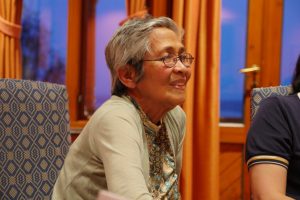 Julieta De Lima is the Chair of the Reciprocal Working Committee on Social and Economic Reforms (RWC-SER) of the NDFP.


